Become an Installer


Have you ever watched your drill motor start smoking mid-mix? You’re trying to get through a batch of concrete or paint, and suddenly everything grinds to a halt.
That moment costs you more than just time.
Standard drills weren’t built for mixing jobs. They’re designed for quick, high-speed drilling, not the slow, sustained rotation that heavy materials actually need.
So if standard drills vs. hand-mixers feels like an obvious choice right now, you’re right. But most people don’t realize just how much money the wrong tool is costing them.
Why Standard Drills Struggle With Heavy Mixing Applications
Standard drills drain their motors fast when you mix heavy materials day after day. Your current setup burns through equipment and cash because drills simply weren’t built for continuous mixing performance.
The Difference Between Drilling and Continuous Material Mixing
Drills lack the torque control and RPM stability that mixing needs. They struggle with thick, heavy materials like concrete, paint, or mortar. The motor burns out fast because it was never designed for this kind of continuous work.
Hand-mixers like Collomixer, on the other hand, deliver consistent performance throughout the entire mixing process. The dual counter-rotating paddles completely eliminate the dangerous counter-torque that a single-paddle drill creates on your wrists.
How Heavy Loads Lead to Motor Burnout and Overheating
Standard drills face serious trouble when they tackle heavy mixing jobs day after day. These tools have motors designed for short bursts, not continuous performance.
The motor gets pushed beyond its limits, heat builds up inside, and parts start to fail. Replacement costs spike fast, and your productivity takes a hit during every downtime event.
Here’s what the real financial damage looks like when you use a standard drill for heavy mixing:
| Cost Item | Per Failure Event | Annual Impact (3 Failures) |
| Motor Replacement Part | $170 | $510 |
| Labor Charges | $45 | $135 |
| Billable Downtime Losses | $120 | $360 |
| Total Annual Cost Per Drill | $1,035 |
A single drill used for heavy mixing averages three motor failures per year. At $1,035 in annual costs per drill, contractors running multiple drills on a single project watch these expenses multiply fast.
What Makes Hand-Mixers Like Collomixer Different
Dedicated hand-mixers deliver the torque control and RPM stability that standard drills simply cannot match during continuous mixing. They also come with practical features that keep your workflow moving without unnecessary interruptions.
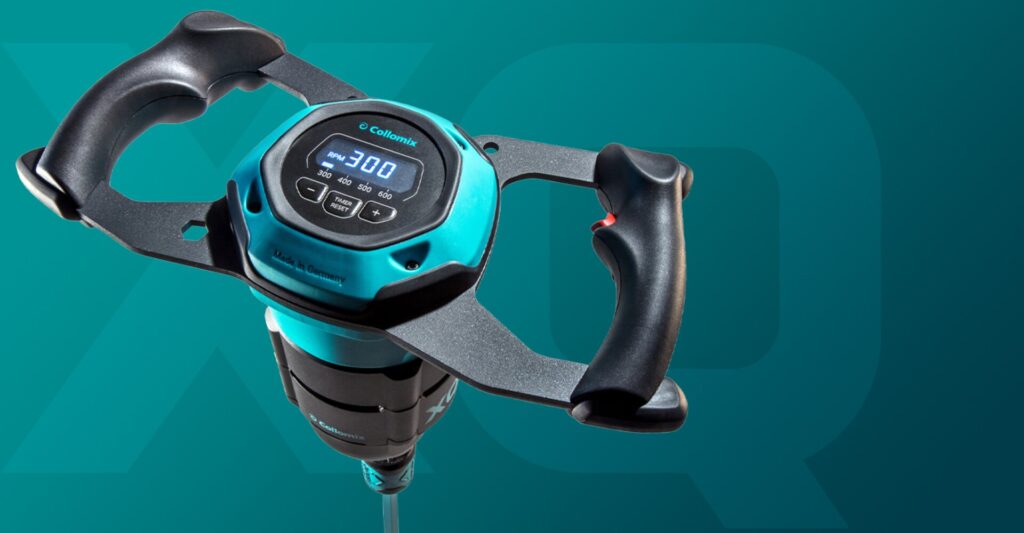
Torque Control, RPM Stability, and Mixing Performance
Hand-mixers like Collomixer bring real advantages through superior torque management, consistent RPM output, and measurably better mixing results. Here’s how they stack up against standard drills:
| Feature | Standard Drills | Hand-Mixers (Collomixer) |
| Torque Control | Torque spikes damage sensitive materials and cause motor strain during prolonged mixing cycles | Precision torque regulation maintains steady force delivery |
| RPM Stability | Motors lose power when handling thick compounds, creating inconsistent mixing patterns | Constant RPM output sustains uniform blending throughout the entire mixing duration |
| Mixing Performance | Temperature inconsistencies develop in large-volume applications | Superior blade geometry and motor pairing produce homogeneous results |
| Load Handling | Motors overheat within 15-20 minutes of heavy mixing work | Extended runtime capability handles industrial-grade loads |
How Dedicated Mixing Tools Extend Tool Lifespan and Improve Consistency
Dedicated hand-mixers like Collomixer preserve your investment because they operate within their intended purpose rather than fighting against mechanical limitations.
Your equipment performs better, runs smoother, and avoids the costly downtime that comes with unexpected breakdowns. Here’s what that steady performance delivers in practice:
- Consistent speed and torque prevent failed batches and wasted materials
- Even load distribution keeps motors cooler across long mixing sessions
- Space-saving design stores easily in tight workshops or job site vehicles
- Versatile enough for concrete, paint, mortar, and culinary applications
How the Wrong Mixing Setup Ends Up Costing More Money
Your current mixing setup drains your wallet faster than you realize, through constant equipment failures, expensive replacements, and wasted materials.
Downtime, Replacement Costs, and Failed Mixes
Here’s a clear breakdown of where the money goes when you rely on standard drills for mixing applications:
| Cost Factor | Impact on Your Operations |
| Unexpected Downtime | Standard drills overheat during continuous mixing tasks, forcing you to stop work and wait for cooling periods. Each interruption cuts into your productive hours. Projects fall behind schedule. |
| Motor Burnout Expenses | Drills designed for drilling applications fail under sustained mixing loads. Replacement motors cost between $150 to $400 per unit. You may need to buy entirely new drills rather than repair them. These expenses accumulate quickly across multiple tools on job sites. |
| Failed Mix Batches | Inconsistent RPM stability during mixing creates poor quality results. Materials separate or mix unevenly. Contractors must discard entire batches and start over. Wasted materials mean wasted money. Failed mixes delay project timelines and damage your reputation with clients. |
| Labor Inefficiency | Crews spend extra time troubleshooting equipment failures. They restart failed mixing operations multiple times. Skilled workers waste time on maintenance instead of productive mixing tasks. |
| Quality Control Issues | Torque fluctuations in standard drills prevent consistent mixing performance. Structural integrity concerns emerge on finished projects. Clients demand rework or compensation. |
Conclusion
Your current setup with standard drills costs you far more money than you realize, through constant downtime, motor burnout, and failed mixes.
Hand-mixers like Collomixer deliver the torque control and RPM stability your mixing jobs truly need for consistent, reliable performance. Switching to dedicated mixing equipment saves you on replacement costs, extends tool lifespan, and boosts your productivity across every project.