Become an Installer
If you’ve ever had a resin bound surface start to fail within a year or two of install, the first thing people blame is the resin. More resin, better result — that’s the common thinking. But that’s not actually how it works. How compaction affects resin bound strength is one of the most overlooked topics in the industry, and getting it wrong is one of the biggest reasons installs underperform.
The strength of a resin bound surface doesn’t come from the amount of resin you use. It comes from how well the aggregate is bonded and locked together into a single, unified structure. And that only happens when compaction is done right.
What Compaction Actually Does in Resin Bound Systems
A lot of installers think of compaction as just flattening the surface. That’s part of it, but it’s doing three more important things underneath that flat finish.
Locks Aggregate Into a Single Structure
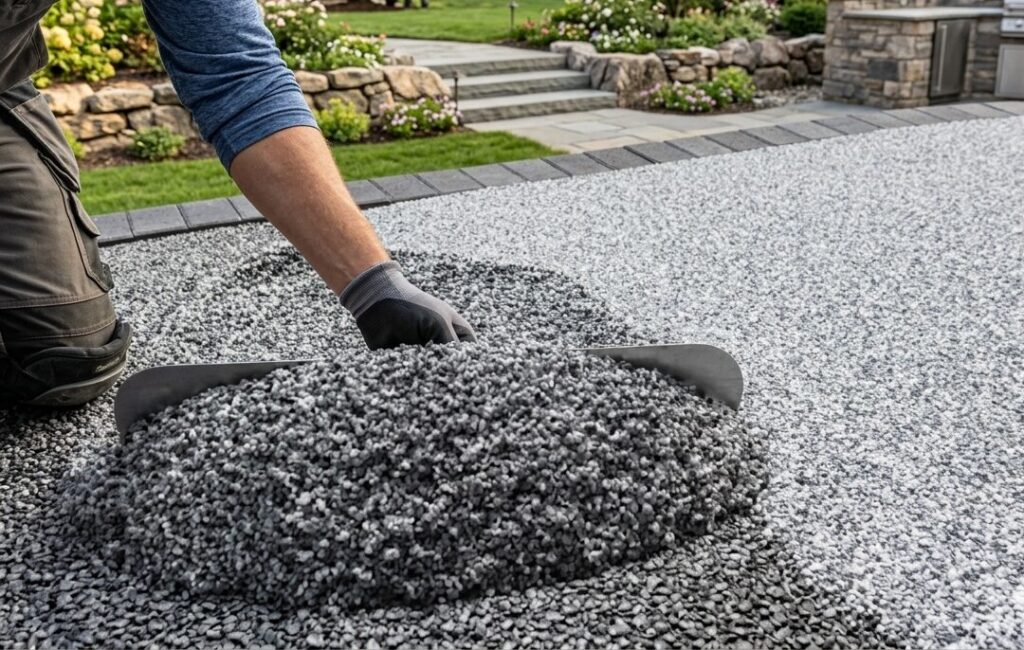
When you apply proper downward pressure, the individual stones get pushed together. The gaps between them close up, the resin fills the contact points, and you end up with a surface that behaves like one solid piece rather than a bunch of loose particles held together by glue. That interconnected structure is what gives resin bound surfaces their load-bearing strength.
Forces Resin to Fully Coat and Bind
Resin doesn’t bond well when it’s just sitting around aggregate. It needs pressure to work it into every surface and contact point. Proper compaction pushes the resin into the spaces it needs to occupy. Without that pressure, you get dry spots and weak bonds.
Engages the Reinforcement Layer
Most quality resin bound installs use a reinforcement mesh underneath. But that mesh only does its job if the material above it is actually driven down into it. Good compaction pushes the resin bound stone into the mesh, creating a mechanical bond between the two layers.
What Happens When Compaction Is Inconsistent or Weak
This is where the job either holds up or falls apart. Poor compaction creates a chain of problems that show up weeks, months, or sometimes years after the install is done.
Air Pockets Create Structural Weak Points
Any gaps left in the material become air pockets. Those pockets are essentially holes in your structure. Under repeated loading — foot traffic, bikes, vehicles — those pockets collapse, and the surface above them cracks or sinks. Once that starts, water gets in, freeze-thaw cycles do their damage, and the repair bills add up fast.
Poor Bonding Between Aggregate
Without enough compaction pressure, stones don’t fully bond to each other or to the resin. The surface can feel stable at first, but individual stones start to loosen over time. You get surface raveling — that rough, sandy look that appears when the top layer starts to break down.
Uneven Load Distribution
When the aggregate isn’t locked together properly, load doesn’t spread across the surface the way it should. Instead of distributing weight evenly, you get stress points — usually at joints, edges, or anywhere compaction was lighter. Those spots wear faster and fail sooner than the rest of the surface.
Surface Looks Fine… Until It Doesn’t
One of the most frustrating things about compaction-related failures is that you usually can’t see them right away. By the time the failure is visible, the cause is long buried under the finished layer. Getting compaction right from the start is a lot cheaper than fixing it later.
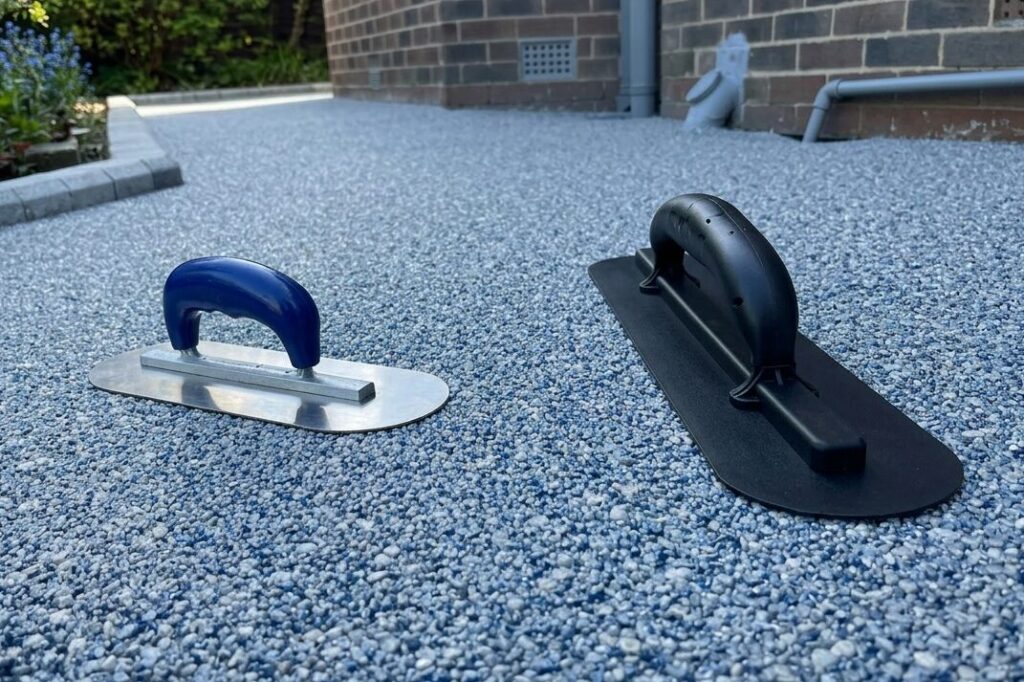
Why Hand Troweling Struggles to Deliver Proper Compaction
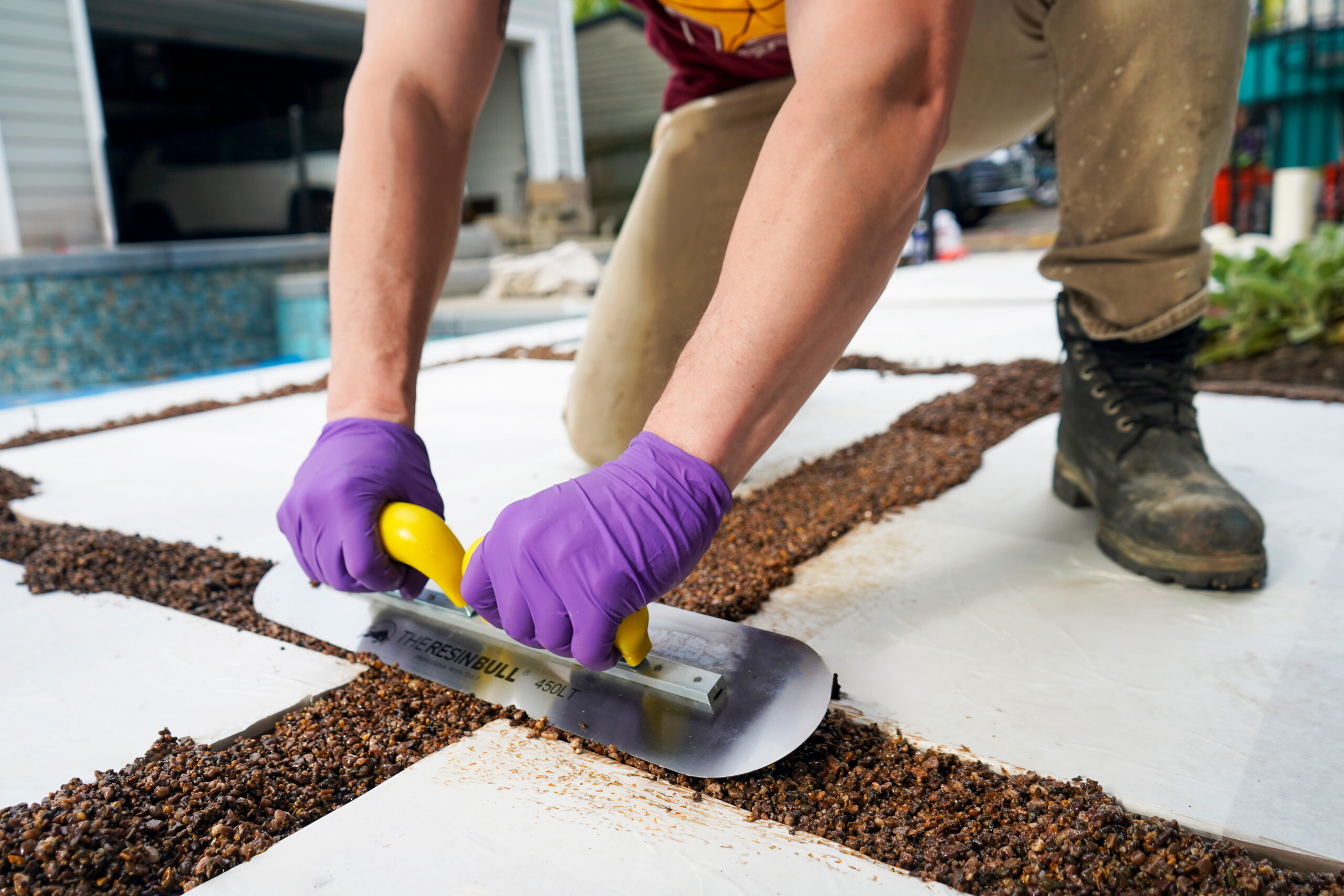
Hand troweling has been the standard method in resin bound installation for a long time. It works. The problem is that it has some built-in limitations that hold back your resin bound installs.
Pressure Is Never Truly Consistent
Every person applies pressure differently. The same installer applies it differently depending on fatigue, angle, section of the job, and how late in the day it is. That variability shows up in the finished surface with some areas compacted well and others less so.
Limited Downward Force
A hand trowel works the surface, but it can only generate so much downward force. It’s not mechanically designed to drive material down. You’re relying on the weight of the tool and the arm strength of the installer, which varies constantly. Mechanical compaction applies consistent, controlled force across the whole surface.
Coverage Gaps Are Inevitable
Hand troweling is a manual process. You’re working quickly, the material has a limited working window, and it’s hard to track exactly which areas have been fully worked and which ones haven’t.
How Mechanical Compaction Improves Resin Bound Strength
When you switch from hand troweling to a purpose-built mechanical application tool, the results are measurable — not just in how the finished surface looks, but in how it actually performs.
Consistent, Repeatable Pressure
Mechanical application takes human variability out of the equation. The same pressure gets applied across every square meter, regardless of who’s running the tool or how tired they are. That consistency means the finished surface has uniform compaction throughout.
Deeper Material Integration
Mechanical tools are designed to drive material down, not just work the surface. That deeper integration means the aggregate is more fully locked together and the resin bond is stronger at every contact point.
Measurable Strength Gains
Independent testing comparing mechanical application to traditional hand troweling shows real, quantifiable improvements in surface strength and flexibility.
Where Glidabull Fits Into the Equation
Glidabull was developed specifically to solve the compaction problem in resin bound installation. It was built by people who install resin bound systems and who understood exactly where hand troweling was falling short.
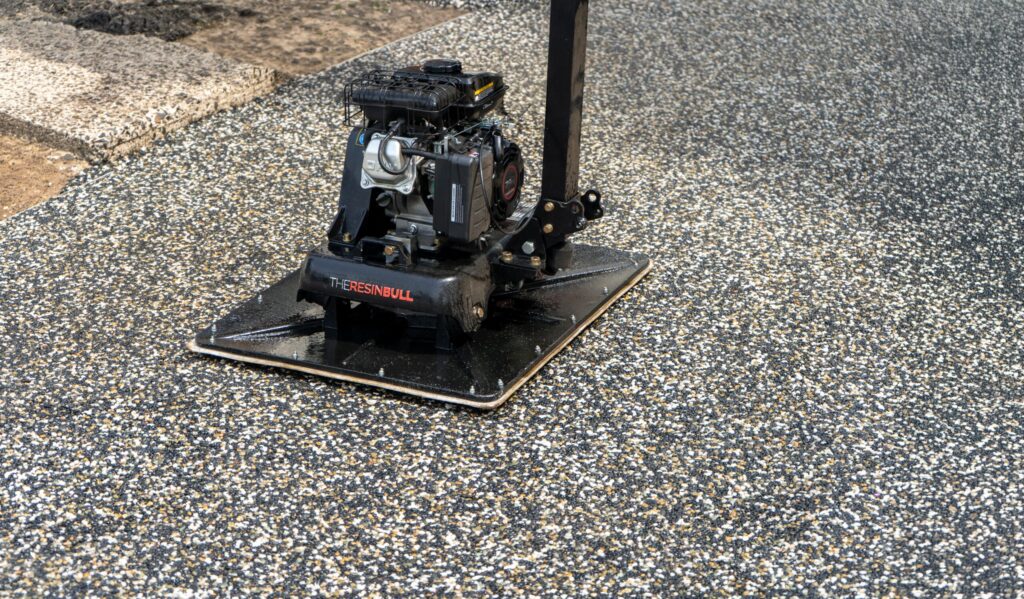
Designed Specifically for Resin Bound Compaction
Glidabull isn’t a generic compaction tool adapted for resin bound work. It was purpose-built for this application. The tool is designed to handle the specific working properties of resin bound stone during the installation window.
Eliminates the Biggest Variable—Human Inconsistency
The biggest variable in any resin bound install isn’t the material — it’s the installer. Fatigue, technique, experience level, and how many square meters have already been done that day all affect compaction quality. Glidabull takes that variability out of the process. Full coverage in two passes, approximately 30 seconds per mix. Every section gets the same treatment, regardless of who’s running the tool.
Improves Both Strength and Efficiency
The results from using Glidabull include up to 22% greater final surface strength compared to traditional hand troweling, along with approximately 7% greater flexibility — which matters for surfaces that need to handle movement and temperature change without cracking. And because the process is faster, with up to 20% reduction in mixing time on a 5-bag system, you’re not sacrificing speed to get those strength gains.
Unlocks Better Material Performance
Better compaction also changes what’s possible with your material spec. Improved compaction allows the use of larger stone blends, which reduces the amount of resin needed and contributes to up to 15% reduction in material costs. This means you can offer clients a stronger, more cost-effective system.
Compaction Is the Part of the Job That Most People Get Wrong
If you take one thing away from this, let it be this: resin bound strength comes from compaction, not from adding more resin. The aggregate needs to be properly locked together, the resin needs to be worked into every bond point, and the reinforcement layer needs to be engaged.
Hand troweling has its place, but its limits are real. If you’re doing volume installs or if you care about producing surfaces that hold up over time, mechanical application is a smarter way to work.
Glidabull is the tool that fixes the compaction problem. It was built for exactly this — delivering faster, stronger, more consistent resin bound installations with less physical strain on your team. Pair it with a quality resin bound system like Pebbletone and you’re improving compaction and building surfaces that last.
Contact us today for a quote on a Glidabull.