Become an Installer

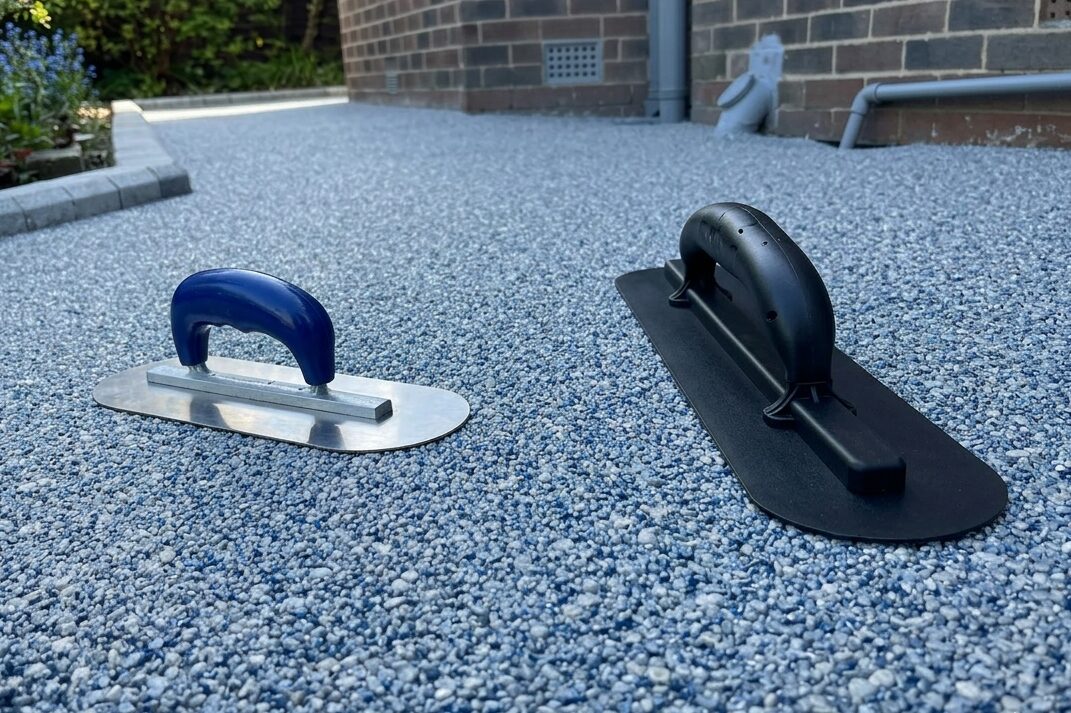
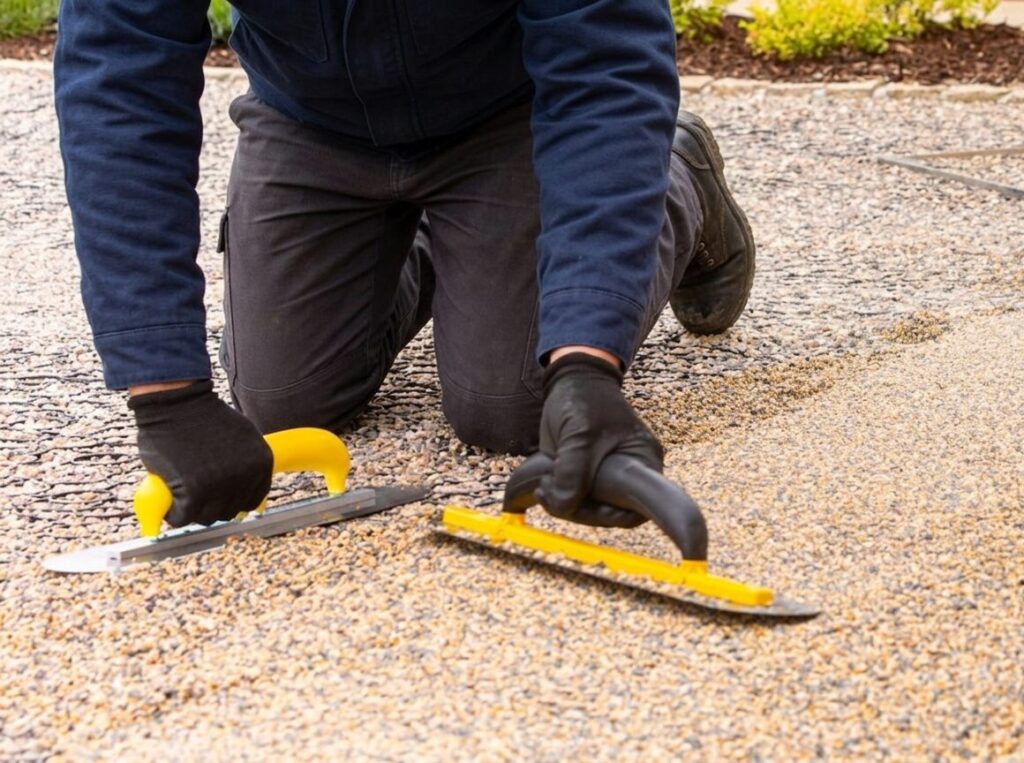
Hand troweling has been the standard for resin bound installs for years. Most guys learned it that way, got good at it, and stuck with it. And honestly? That makes sense. It works. But just because something works doesn’t mean it isn’t costing you time, money, and physical wear every single job.
If you’ve ever finished a long day of hand troweling and felt it in your shoulders, or looked back at a section and wondered if the compaction was even — you already know the problem. Hand troweling isn’t wrong. It’s just inefficient, inconsistent, and physically limiting in ways that add up fast when you’re running a real operation.
The Problem With Hand Troweling (That Most Installers Ignore)
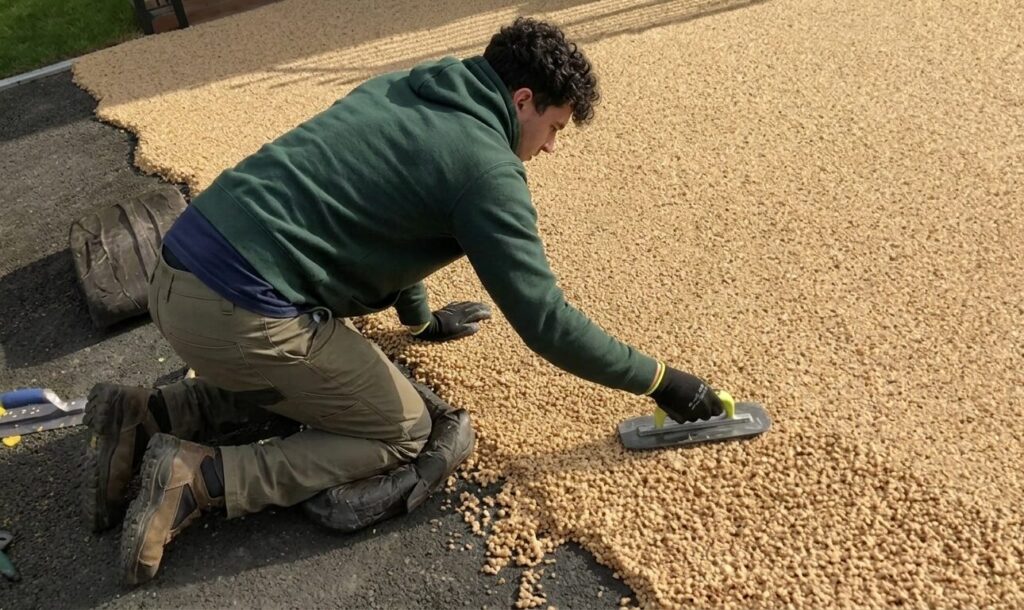
It’s Inherently Inconsistent
Here’s the honest truth about hand troweling: the pressure you apply at 8am is not the same pressure you apply at 3pm. Your body gets tired. Your technique shifts. The guy next to you applies force differently than you do.
That inconsistency shows up in the finished surface. Some areas get compacted properly. Others don’t. The surface might look fine when you pack up, but weak spots — areas where the resin didn’t fully lock the aggregate together — can cause problems down the line. And the frustrating part is you often can’t see it until it’s too late.
It Relies Too Much on Skill
Hand troweling quality is directly tied to the person holding the trowel. Your best installer gets great results. A newer crew member? Not as consistent. That creates a real bottleneck if you’re trying to grow.
Training someone to hand trowel well takes time, and even then, you’re still depending on their feel and judgement.
It Slows Down Production
Multiple passes. Careful overlap. Constant checking. Hand troweling is slow, and the time adds up across a job. If you’re installing several bays a day, the minutes lost per mix start to really matter. Fewer installs per week means less revenue, plain and simple.
It Breaks Down Physically Over Time
Ask anyone who’s been troweling a resin bound paving system for five or ten years. The repetitive motion, the manual pressure, the crouching — it wears on your body. Fatigue toward the end of a job also affects the quality of the work. The last section of the day rarely gets the same compaction as the first.
Where Hand Troweling Actually Fails Structurally
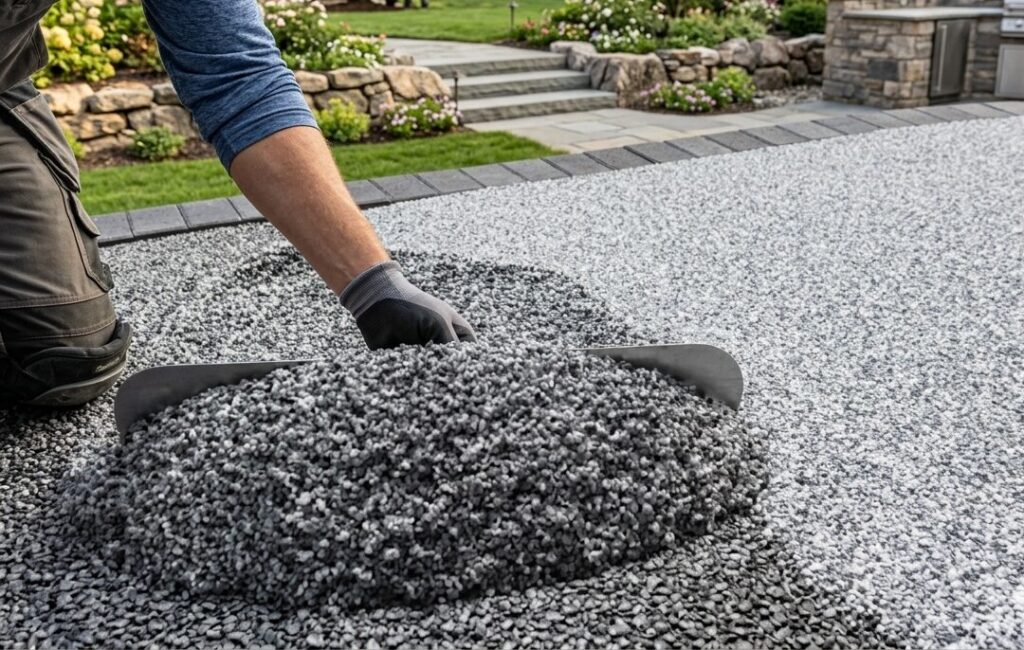
Poor Compaction = Weak Bonding
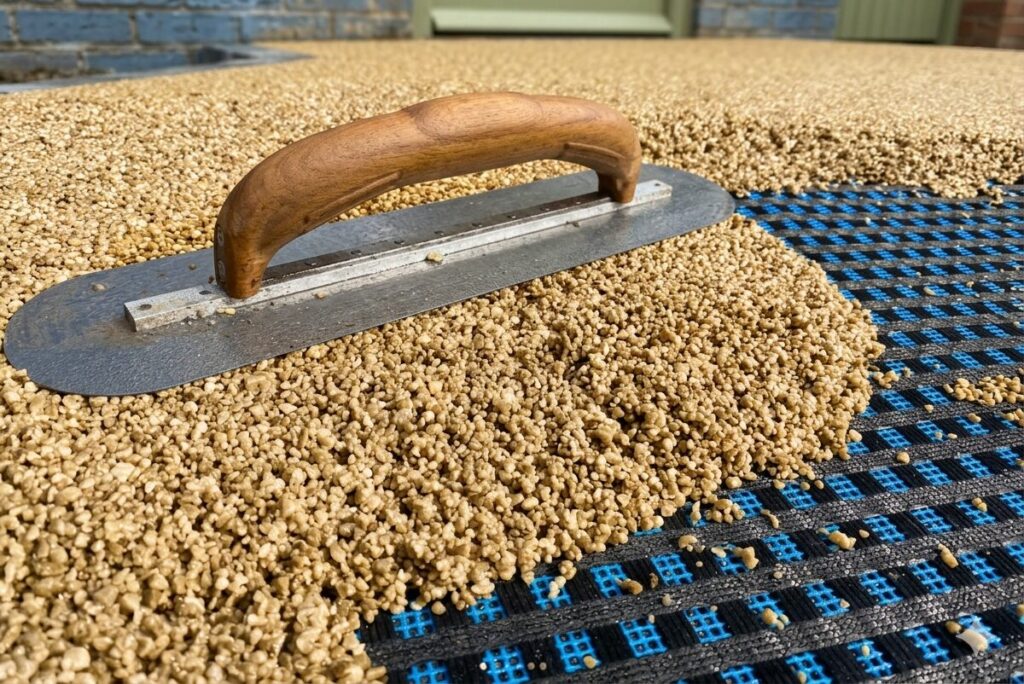
The whole point of compaction in resin bound work is to drive the aggregate into the resin and lock everything together, especially into the reinforcement mesh beneath. Hand troweling can only apply so much downward force. And that force is never perfectly uniform.
The result? Air pockets. Uneven bonding. Sections where the resin didn’t fully penetrate. That all adds up to a weaker surface than you’d get with proper mechanical compaction.
Uneven Pressure = Uneven Surface Performance
When pressure varies across a surface, which it always does with hand troweling, some areas end up over-worked while others are under-compacted. Over time, the under-compacted spots wear faster or develop surface issues. That’s when the callbacks start.
Limited Force Application
There’s a ceiling to how much force a human can apply manually, especially across a full day of installs. Mechanical compaction doesn’t have that ceiling. It applies consistent, measurable force every single time.
The Real Cost of Doing It the Old Way
Lost Time = Lost Revenue
Slower installs mean fewer jobs per week. It really is that straightforward. If hand troweling adds even 20 minutes to a typical job, that’s time you’re not using to start the next one. At scale, that’s a significant chunk of revenue left on the table every month.
And labor costs don’t go down just because you’re going slower. If anything, slower installs mean higher labor cost per square meter.
Material Inefficiency
Poor compaction also limits what aggregate sizes you can confidently use. If you can’t guarantee proper compaction, you stick with smaller stones and more resin to fill gaps. Better compaction opens up larger stone blends — which actually reduces how much resin you need per mix. That’s a direct material cost saving you’re missing out on every job.
Rework and Callbacks
Weak spots in the surface don’t usually show up immediately. They show up six months later when a section starts to fail. Then you’re going back out, using your materials, and spending your time to fix a problem that shouldn’t have happened in the first place. Those callbacks eat into margin fast.
What Changes When You Remove Hand Troweling From the Equation
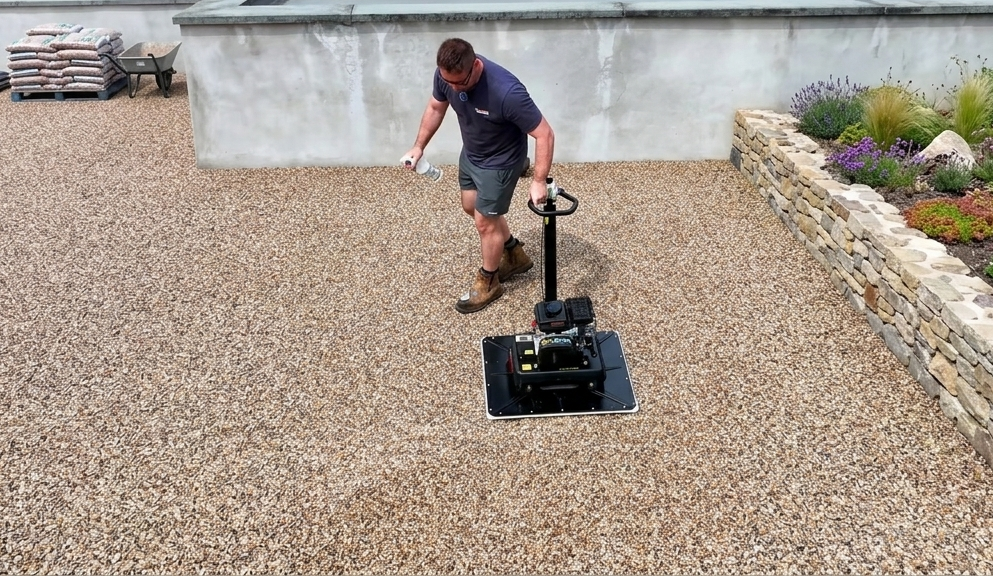
This isn’t about replacing skill. A good installer knows the job inside and out. This is about removing the variability that comes with doing everything manually.
Consistent Compaction Across the Entire Surface
Mechanical compaction applies even pressure every time. It doesn’t get tired. It doesn’t vary from one side of the mix to the other. Every pass covers the surface the same way, which means the compaction is actually uniform — not just hopefully uniform.
Faster Installation Cycles
Full coverage in two passes at around 30 seconds per mix. That’s a real, measurable difference. When you stack that up across a full day of installs, you’re looking at a significant reduction in time on site. Up to 20% less mixing and placement time with a 5-bag system — time you can put toward getting to the next job.
Stronger Final Surface
When material gets actively driven into the reinforcement mesh — not just spread across the top of it — you get a fundamentally stronger bond. Testing has shown up to 22% greater final surface strength compared to traditional hand troweling.
Reduced Physical Strain
Crews that aren’t exhausted from manual troweling all day stay consistent throughout the job. Less fatigue means better quality at 4pm, not just at 9am. And long-term, it means less risk of repetitive strain injuries — which is a real cost to any installer operation.
Where Glidabull Fits Into a Modern Resin Bound Workflow
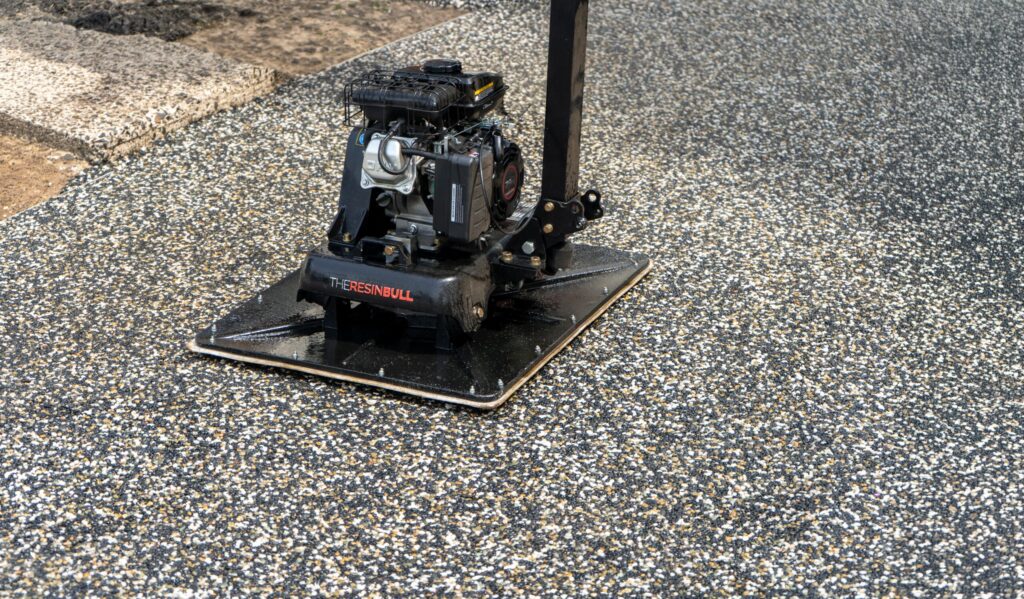
Glidabull was developed by The Resin Bull in collaboration with Optus Resin and Daltex specifically to address the compaction problem in resin bound installs. It’s purpose-built installation equipment — not a modified tool, not a workaround. Something designed from the ground up for this application.
Designed for Mechanical Compaction, Not Manual Guesswork
Glidabull eliminates pressure inconsistency by standardizing the compaction process. The result is a consistent finish quality that doesn’t depend on who’s on the crew that day or how tired they are.
Built for Speed Without Sacrificing Quality
The two-pass system covers a full mix in roughly 30 seconds. That keeps crews moving without having to revisit areas. When you’re not burning time re-working sections, the whole job runs faster.
Unlocks Better Material Performance
Better compaction means you can confidently use larger aggregate blends. More stone, less resin. That adds up to approximately 15% potential reduction in material costs — which is real money on every job.
Makes Results More Repeatable Across Crews
One of the hardest parts of scaling a resin bound operation is getting consistent quality across different installers. With hand troweling, you’re always at the mercy of individual skill. With a mechanical system like Glidabull, quality becomes process-driven. That means easier training, better crew scalability, and fewer quality control headaches.
Hand Troweling vs Glidabull: Side-by-Side
| Category | Hand Troweling | Glidabull |
| Time per mix | Multiple passes, slower placement | Full coverage in ~30 seconds (2 passes) |
| Surface consistency | Varies by installer, fatigue, time of day | Repeatable across every operator |
| Physical effort | High — causes fatigue and long-term strain | Low — less repetitive manual force |
| Surface strength | Standard — depends on manual compaction | Up to 22% stronger final surface |
| Material flexibility | Limited — smaller aggregate blends only | Larger stone blends, up to 15% cost savings |
| Scalability | Bottlenecked by your best installer | Trainable, consistent across full crews |
When Hand Troweling Still Makes Sense
There are still situations where hand troweling is the right call. Detail areas and tight edges where equipment can’t maneuver. Small repairs where pulling out full mechanical compaction isn’t practical. Touch-up work at the perimeter of a larger install.
Glidabull isn’t meant to replace every aspect of the finishing process. It’s meant to handle the bulk of compaction work where consistency and speed matter most — and let hand troweling do what it’s still good at: the detail work.
The Bottom Line
Hand troweling is skill-dependent, physically limiting, and inconsistent at scale. That’s just the reality of applying manual force to a surface all day, every day, with different people and different energy levels.
Mechanical compaction changes that. Repeatable results. Faster installs. Stronger surfaces. Less physical wear on your crew. And better material efficiency that shows up directly in your margins.
The industry is shifting toward efficiency-focused tools and processes. Installers who make that shift earlier get more jobs done, deliver better quality, and build operations that don’t rely entirely on finding (and keeping) top-tier manual labour.
Glidabull is part of that shift. If you’re ready to install resin bound paving faster, stronger, and cheaper — get in touch with the Optus Resin team for a quote.