Become an Installer


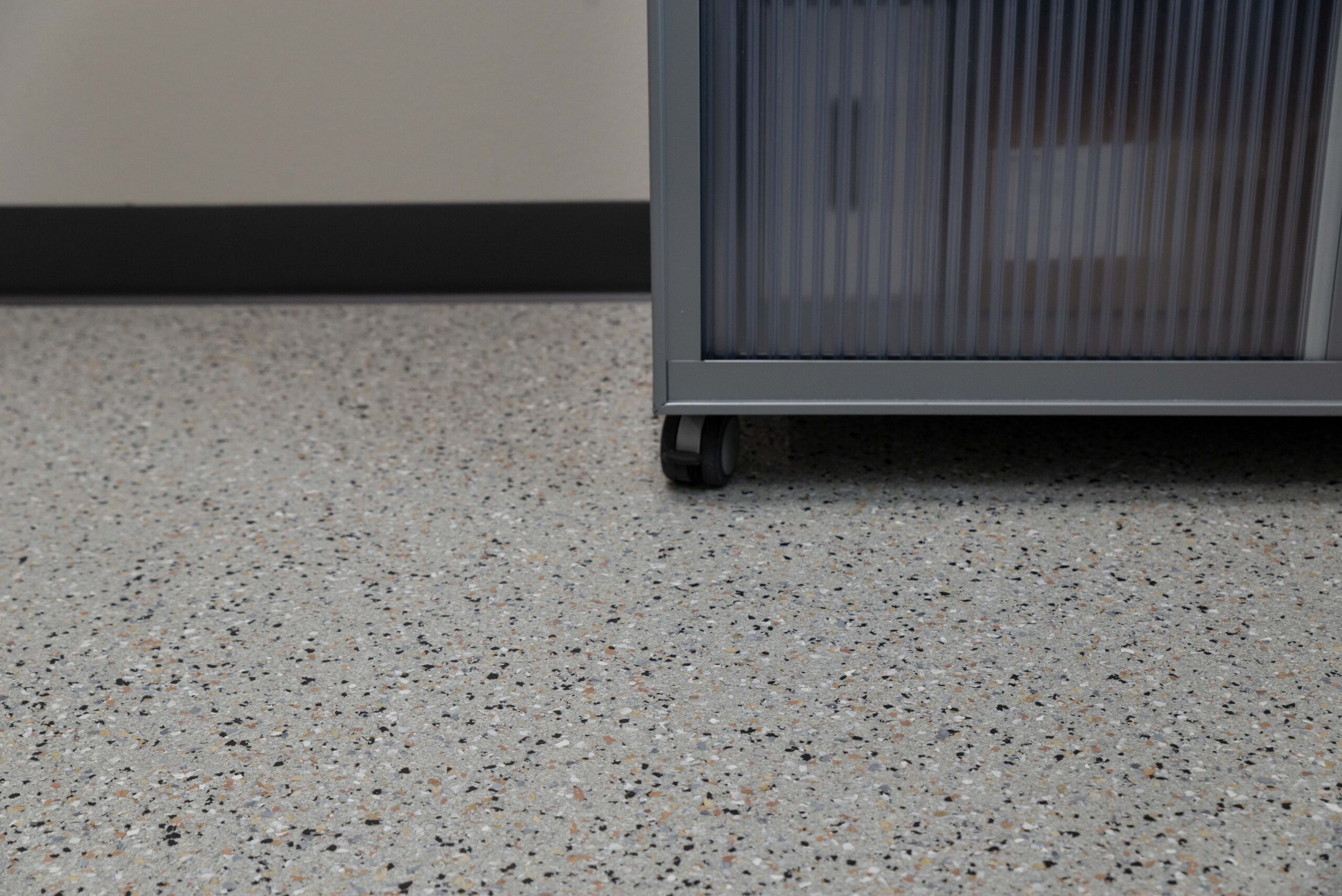
Ever walked into a building and been stopped in your tracks by a beautiful, speckled floor?
There’s a good chance that was terrazzo. But here’s the thing: real terrazzo is gorgeous, but the installation is complex, expensive, and requires highly skilled craftspeople. That’s where simulated terrazzo flooring comes in as a game-changer.
Simulated terrazzo gives spaces that same polished, high-end look without the headaches. It uses engineered materials that are easier to install, more budget-friendly, and still incredibly durable for high-traffic commercial areas. Let’s walk through what makes simulated terrazzo such a smart choice for modern spaces.
Materials and Manufacturing Process
Simulated terrazzo flooring combines engineered materials to recreate that classic terrazzo aesthetic. The base is typically a resinous epoxy or non-hydraulic cement binder mixed with decorative aggregates like marble chips, glass pieces, or synthetic fragments.
The result? A customizable composite that looks stunning and holds up beautifully.
The Mix Ratio and Curing Process
Epoxy terrazzo uses a precise 5:1 ratio of resin to hardener. Installers mix this thoroughly before adding filler powder and aggregates (typically a minimum of 180 pounds per batch). The mixture is poured in place, troweled to the desired thickness, and left to cure for at least 18 hours before grinding begins.
This careful process reveals those colorful, reflective surfaces that mimic traditional terrazzo at a fraction of the cost.
Benefits of Simulated Terrazzo
Simulated terrazzo brings together style and practicality in ways that make commercial projects run smoother. Here’s what sets it apart.
Seamless Beauty and Durability
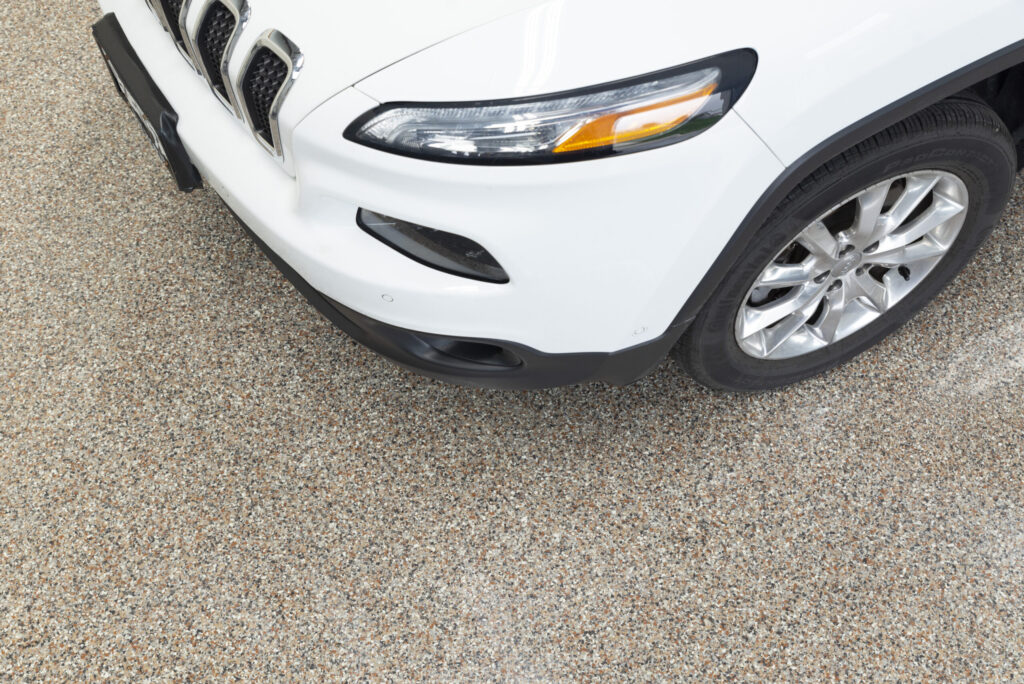
The polished surface created by epoxy or porcelain tile systems closely replicates classic terrazzo. This flooring is engineered to handle the daily punishment of high-traffic commercial spaces like offices, hospitals, and retail stores.
Design Flexibility on Your Terms
Designers can create unique patterns and colors to match any aesthetic vision. The ability to incorporate brand logos or custom designs makes simulated terrazzo especially appealing for businesses wanting a signature look.
Practical Advantages
- Installation is faster and simpler compared to traditional poured terrazzo, cutting project timelines and labor costs.
- The non-absorbent finish resists stains and moisture, requiring only routine sweeping and mopping with pH-neutral cleaners.
- VOC-free products support healthier indoor air quality in public settings like schools and medical facilities.
- Cost-effective pricing delivers long-lasting performance without the premium price tag of traditional terrazzo.
Comparison to Traditional Terrazzo
The differences between simulated and traditional terrazzo come down to materials, installation complexity, and long-term value. Here’s a clear breakdown.
| Feature | Simulated Terrazzo | Traditional Terrazzo |
| Materials | Resinous matrices with marble, glass, or synthetic aggregates | Cementitious or epoxy binders paired with natural stone or recycled glass chips |
| Thickness | Finishes to 1/4 to 3/8 inch thick | Usually 1/2 to 1 inch thick |
| Installation Time | Faster installation; less labor-intensive | Labor-intensive process; requires skilled artisans; longer installation time (can cure for days) |
| Environmental Impact | VOC-free formulas; eco-friendly mineral compounds | May involve higher embodied energy; traditional cement and chemical usage |
| Design Flexibility | Highly customizable; wide range of aggregates; adapts easily to brand logos and unique patterns | Customizable but limited by traditional aggregate options and labor-intensive process |
| Durability | Durable and non-absorbent; ideal for high-traffic commercial spaces | Extremely durable and resilient |
| Maintenance | Low maintenance; easy to clean with pH-neutral cleaners; resists stains and wear | Requires periodic resealing (every 2-5 years); can be porous if cement-based and unfinished |
| Best Use Cases | High-traffic commercial settings, renovation projects, spaces needing fast turnaround and low upkeep | Prestigious public buildings, institutions, or high-end projects where longevity and authenticity matter most |
Conclusion
Simulated terrazzo flooring delivers the timeless elegance of traditional terrazzo without the cost, complexity, or extended installation timelines. By combining engineered resins with decorative aggregates, it offers designers and facility managers a durable, low-maintenance solution that performs exceptionally well in high-traffic commercial environments. Faster installation, design flexibility, and long-term durability make it a practical choice for modern projects where both aesthetics and efficiency matter.
For contractors and specifiers exploring simulated terrazzo options, it’s worth asking about Optus Resin’s simulated terrazzo flooring series, which features systems like OptiRazzo and ResiFlow. These products are engineered to provide consistent results, customizable design options, and reliable performance across commercial applications. With the right system in place, simulated terrazzo becomes a smarter, more efficient way to achieve a premium finish.