Become an Installer



You know, making the switch from decorative to industrial flooring can feel like stepping into a whole new world.
You’ve been focused on creating beautiful spaces, and now you’re looking at heavy-duty commercial projects where function takes center stage. But here’s the good news: you don’t have to lose your design edge or your focus to make this transition work.
In this article we’ll go over the exact steps you need, from assessing what you’ve got right now to training your team and marketing your new capabilities.
Assessing Your Current Business Readiness
Before you dive headfirst into industrial flooring, you need an honest look at where you stand today. Start by examining your current flooring projects and the skills your team brings to the table.
Decorative flooring, like luxury vinyl tile, requires a sharp eye for design integration and visual appeal. Industrial flooring, on the other hand, demands a strong focus on surface alignment, installation techniques, and the ability to handle both hard and soft surfaces safely in high-traffic environments.
Here’s what you need to check:
- Equipment inventory: Do your tools and machines suit commercial flooring jobs? Some equipment works beautifully for decorative spaces but struggles with the demands of large-scale commercial areas.
- Team skill assessment: Can your workers execute smooth transitions between different flooring types?
- Client portfolio review: Look at your past clients and contracts. Are you already reaching commercial spaces, or have you been primarily focused on high-end residential projects?
This clear assessment of your business readiness will guide you in choosing the best path forward during any major flooring transition project.
Training and Skill Development for Your Team
Moving into epoxies, polyaspartics, urethane mortars and similar systems is as much a training problem as a sales problem. The techniques are different: mixing windows are shorter, substrate tolerances are tighter, and the consequences of poor prep are immediate and expensive. Give your crew time to get comfortable with the chemistry and the rhythm.
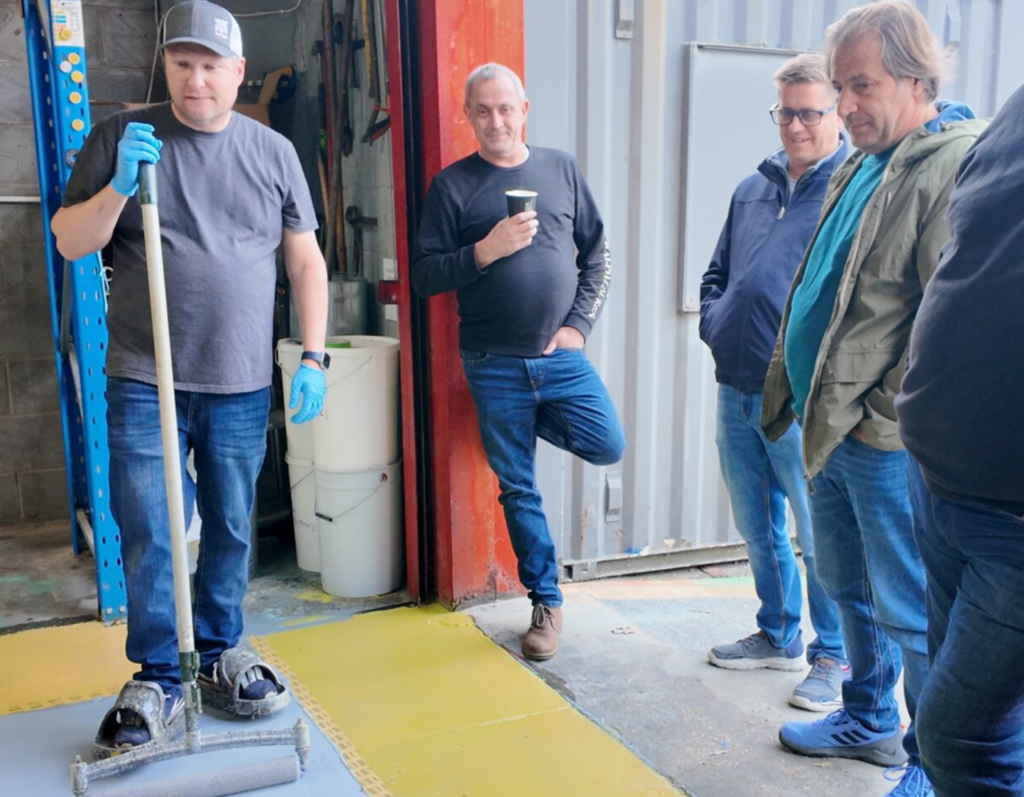
Hands-on sessions win every time. Run mock installs on spare slabs so teams learn to judge pot life, gauge broadcast rates, and manage high-volume pours. Don’t ignore the basics: understanding substrate profile, moisture testing, and crack repair will save you more money than any fancy marketing line.
Marketing the Transition Effectively
When you’re ready to tell people, frame the message around problems you solve, not product names. Facility managers and contractors care about uptime, maintenance budgets, and safety. Show them that polyaspartic screeds offer fast cure and minimal downtime; show property owners that resin bound paving gives permeability and a premium look that lasts.
Use visuals that prove scale: before-and-after photos of large floor bays, time-lapse of prep and install, and close-ups that demonstrate texture and finish quality. Keep decorative options like decorative flakes or colored quartz as secondary choices—nice to mention, but not the lead.
Network where your new buyers are. LinkedIn and industry groups beat consumer social channels for this work. Partner with contractors and architects on pilot projects and ask for case studies.
Target the Right Channels
Use simple language in ads, social posts, and brochures to explain installation techniques such as transition strips or surface alignment. Focus on benefits like cohesive design and visual appeal for business owners looking for both function and style.
| Marketing Channel | Best For | Key Message Focus |
| Commercial clients, facility managers | Expertise, certifications, commercial project experience | |
| Facebook/Instagram | Small business owners, retail | Visual transformations, before-and-after photos |
| Industry trade publications | Architects, designers, contractors | Technical capabilities, large-scale project success |
Operational Strategies to Maintain Focus
Expanding services often introduces chaos unless you lock down operations first. Set short, achievable KPIs for new installs. Make these specific targets like square footage per day, acceptable moisture readings before pour, and documented mix ratios. Keep daily briefings short and focused; they’re the most reliable way to catch issues early.
Maintain separate workflows when you start. If possible, allocate a dedicated team to industrial installs for the first months so decorative jobs don’t suffer. That avoids the “learn on the job” trap that creates callbacks. Build simple checklists that travel with every job: substrate condition, remediation done, mix used, cure conditions. Documentation protects you and builds confidence with commercial clients.
Conclusion
Do the groundwork: assess honestly, train deliberately, market to the right buyers, and tighten operations. And when you choose materials, pick partners who stand behind their chemistry. Working with a supplier like Optus Resin gives you consistent product performance and technical support so your installs do what you promise. The right combination of skill and supply is what turns a strategic shift into sustainable growth.