Become an Installer


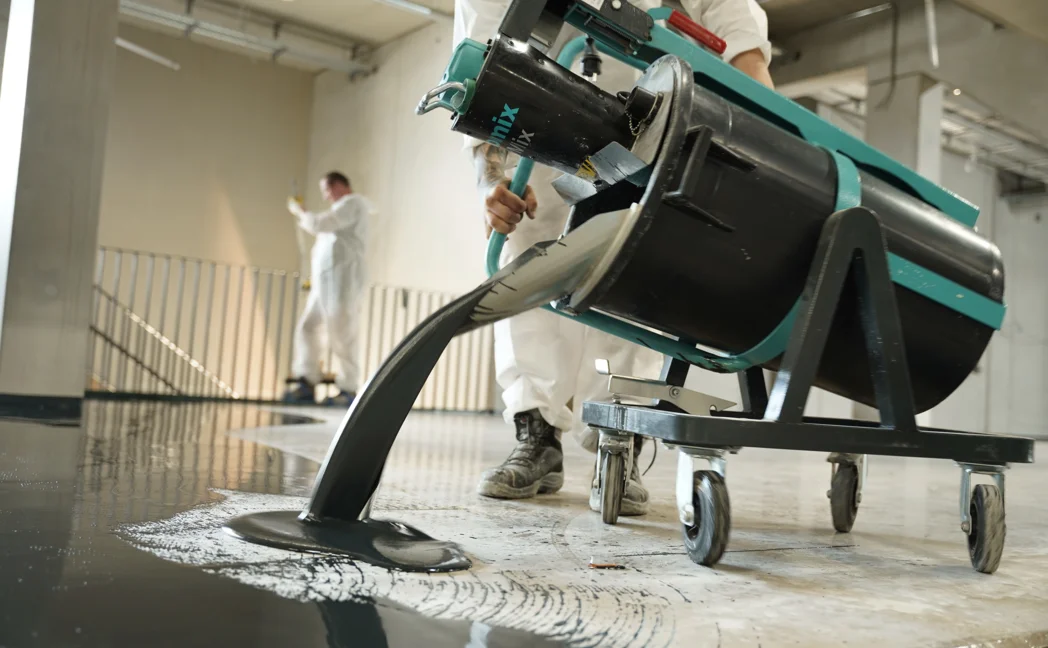
If you’ve ever pulled up a section of resin bound surface six months after install and found a soft spot right in the middle — you already know what bad mixing does to a job. The customer calls. You drive out. You fix it on your dime. That’s the real cost of using the wrong mixer.
Let’s talk about the actual numbers — and why the best resin mixer for contractors isn’t the cheapest one in the catalog.
Why Hand Drills Fall Short on Resin Bound Work
Here’s the problem with a standard hand drill and a mixing paddle: it spins fast on the outside and barely moves in the center. You get maybe 60-70% of your aggregate actually coated in resin. The rest? It sits in dead zones at the bottom of the bucket or near the paddle shaft.
Those dead zones become soft spots. Soft spots become callbacks.
There’s also the consistency issue. When you’re hand-mixing, every batch depends on the person holding the drill. Are they tired? Did they swap crew members halfway through a pour? You’ll never get the same mix twice. That’s a real problem when you’re trying to match resin bound batch consistency across a large driveway or path.
Anyone who’s done this work long enough will tell you the same thing: vertical paddle mixers move material in a consistent helical pattern that reaches the full volume of the bucket. Hand drills create shear mixing at one point. Vertical paddles create full-volume mixing throughout.
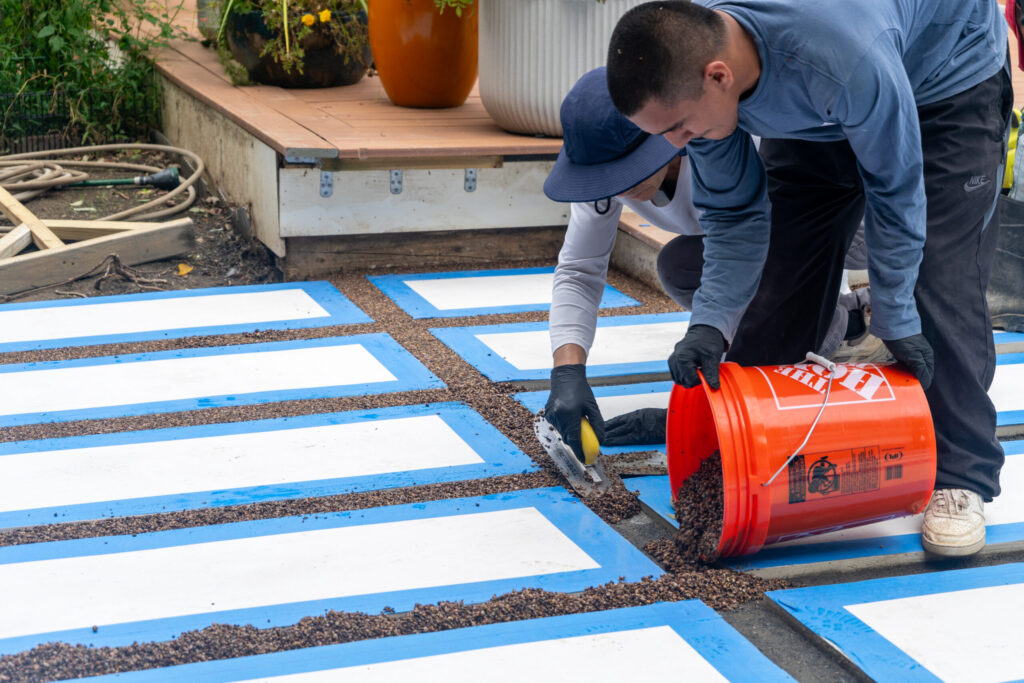
The 15-Minute Difference — Where Does the Time Actually Go?
On a typical 25kg resin bound batch, here’s what the time breakdown looks like with a hand drill vs a dedicated system like the Collomix®:
Hand drill mixing:
- Pre-mix aggregate: 2-3 minutes
- Add resin, mix at low speed: 3-4 minutes
- Switch to higher speed, scrape bucket sides: 2 minutes
- Second check mix (because you’re not sure): 3-4 minutes
- Scrape, check, pour: 2 minutes
- Total: 12-15 minutes per batch
Collomix® vertical paddle mixer:
- Add materials in correct order: 1 minute
- Full mix cycle with paddle down: 3-4 minutes
- Confirm visual consistency, pour: 1 minute
- Total: 5-6 minutes per batch
That’s 8-10 minutes saved per batch. On a driveway that needs 12 batches, you’re saving 90-120 minutes. That’s nearly two hours back in your day — on a single job.
Over a week of installs? You’re looking at half a day of recovered time.
Vertical Paddle Mixer vs Hand Drill: The Technical Breakdown
The vertical paddle mixer vs hand drill debate isn’t really a debate once you understand the mechanics.
A hand drill spins horizontally. The paddle creates turbulence in a small zone. Heavier aggregate sinks. Lighter material floats. You compensate by tilting the drill, scraping the bucket, and hoping.
A vertical paddle mixer — like the Collomix® XQ4, Xo55-R, or TMX1000 depending on your batch size — is designed specifically for dense, thick materials. The paddle geometry forces material upward from the bottom and downward from the sides in a continuous circulation pattern. Every particle gets coated. Every time.
The Collomix® system also reduces torque feedback on the operator. If you’ve ever had a hand drill twist back on you mid-mix — especially with larger paddles in a full bucket — you know how fast that wears out a wrist. Over a six-hour pour day, that adds up.
Physical fatigue reduction is a real productivity factor. A tired mixer makes worse mixing decisions. A properly engineered tool takes that variable out of the equation.
Unmixed Pockets and What They Actually Cost You
Let’s get real about what a soft spot costs.
You pour, you lay, you finish. Job looks great. Three months later, a section fails. Customer emails. You have to:
- Go back out (half a day minimum)
- Cut out the failed section
- Re-order materials
- Re-pour and re-finish
- Hope the new section matches the weathered surrounding area
This costs you time, money, and potential business due to reputation damage. All of that traces back to one thing: unmixed pockets of resin in the original batch.
Which Collomix® Model Is Right for Your Jobs?
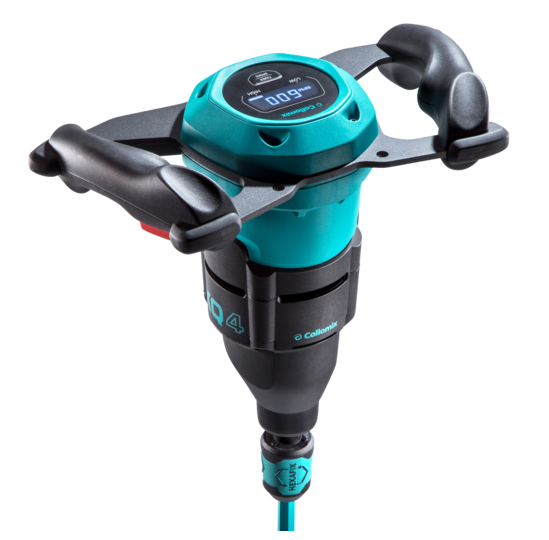
Optus Resin carries three main options, and the right one depends on your typical batch size and job volume.
XQ4 — This is the entry point and it’s solid for smaller residential work. Great for crews doing garden paths, small driveways, and anything under a certain volume per day. Lightweight enough that one person can handle it without fatigue issues.
Xo55-R — The mid-range workhorse. If you’re doing full driveway installs regularly, this is the one most professional crews end up with. The dual-paddle configuration handles thicker mixes and larger buckets without losing that even circulation pattern.
TMX1000 — This is for the high-volume contractor or the crew running multiple pours simultaneously. If you’re doing commercial work or large-scale residential projects where you need batch after batch with zero variation, the TMX1000 is the answer. Built-in stands, higher torque, designed for sustained use.
Is It Worth the Investment?
If you’re doing resin bound work more than once a week, yes. Easily.
The XQ4 pays for itself after you avoid one callback. The Xo55-R pays for itself inside the first month if you’re doing 3-4 residential installs per week.
And that doesn’t count the material waste you reduce, or the jobs you can fit in because your crews are finishing faster.
Getting Consistent Results on Every Pour
Resin bound batch consistency is what separates the contractors who build a reputation from the ones who are constantly putting out fires. When every batch looks the same, lays the same, and cures the same, your installs look better and last longer.
That’s not just good for the customer. That’s good for your business.
If you want to see the Collomix® range in detail or get advice on which model fits your workflow, check out the Collomix section on the Optus Resin website or get in touch directly. The team can walk you through the specs and help match the right mixer to the scale of work you’re doing.
Stop losing time and money to the wrong tool. The math works out pretty quickly once you start running the numbers.